
A Child Centered Approach to Learning
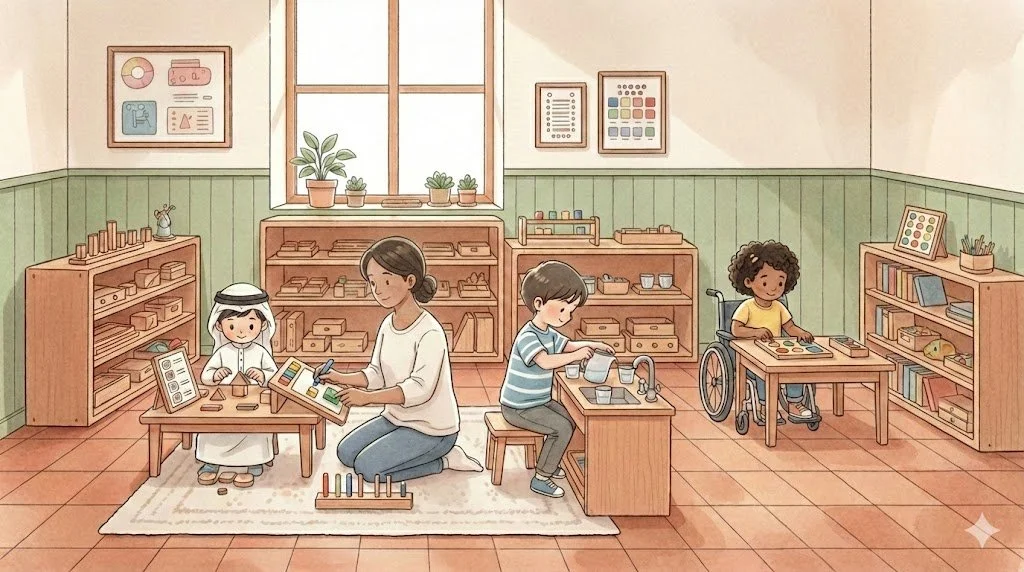
Discover how Montessori education nurtures confident, curious, and independent learners through hands-on exploration and respect for each child's unique journey.
SEND - Every Child Belongs
Diversity, Equity and Inclusion (DEI)
We believe education should respond to the individual child. Montessori education is intrinsically inclusive, offering personalized learning pathways that honor each child’s pace, strengths, and ways of engaging with the world.
While Dr. Maria Montessori did not use modern DEI terminology, her philosophy is deeply rooted in respect for the child and the cultivation of global citizenship. In practice, Montessori environments foster inclusion through culturally responsive materials, mixed-age classrooms, observation-led guidance, and personalized learning experiences that nurture empathy, understanding, and respect for diverse cultures, abilities, and backgrounds.
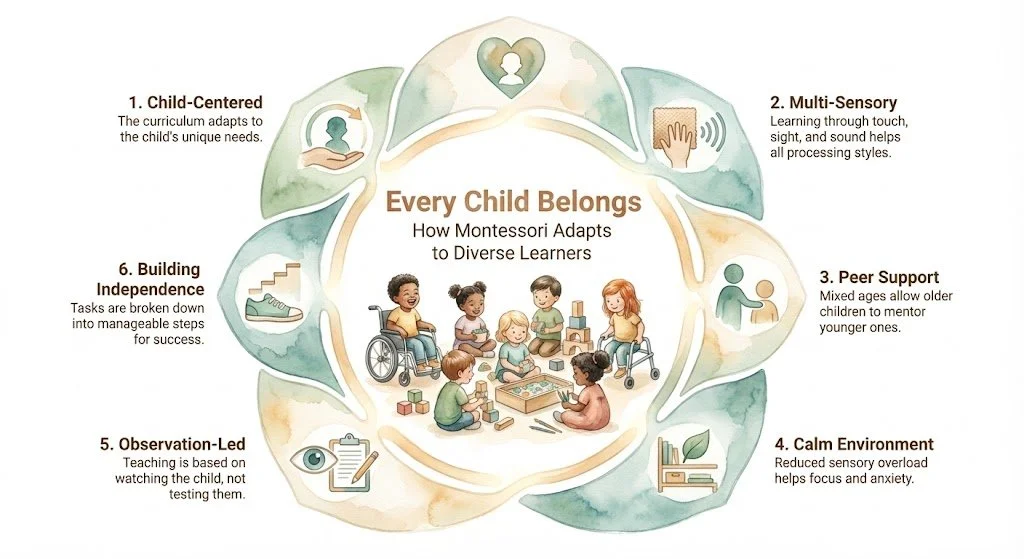
Whether a child is gifted, has Special Educational Needs and Disabilities (SEND), or demonstrates diverse learning styles, the Montessori learning environment is intentionally designed to meet individual needs and build confidence. Carefully prepared spaces, multi-sensory materials, and mixed-age groupings support independence, capability, and self-efficacy, allowing every child to feel safe, valued, and empowered.
Our commitment is to support the development of inclusive Montessori environments where every child is respected, supported, and enabled to reach their full potential—academically, socially, and emotionally. Staff Training and Leadership Support Educators and leaders receive guidance and training to build confidence in inclusive practices and create a culture of belonging across the school community.
Child Centered Development
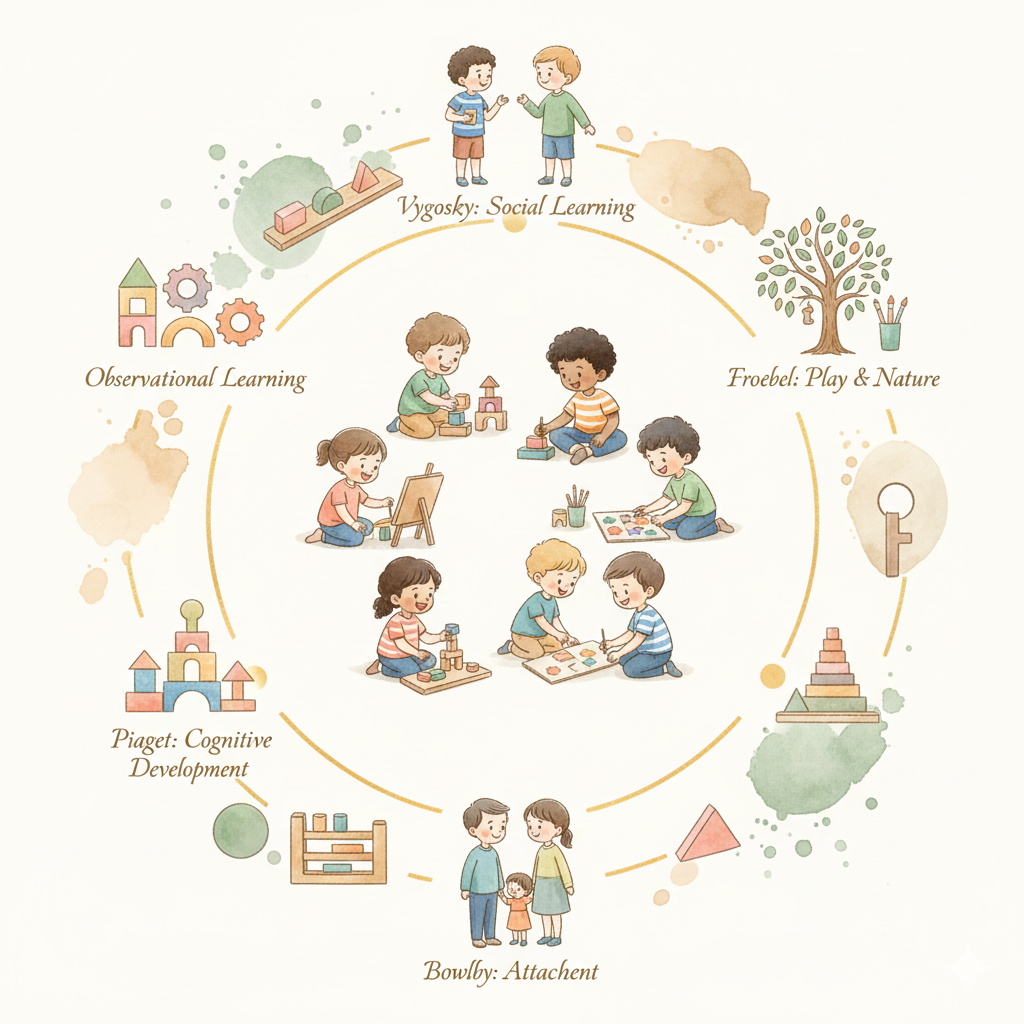
Our understanding of child-center learning has been shaped by generations of educators and researchers who carefully observed how children grow, play, and learn:
Lev Vygotsky – Sociocultural Theory Children learn best through interaction, shared experiences, and gentle guidance.
Friedrich Fröbel (Froebel) – Father of Kindergarten & Play-Based Learning Play, creativity, and a connection with nature nurture curiosity and joyful learning.
John Bowlby – Attachment Theory Strong, trusting relationships give children the security they need to explore the world.
Jean Piaget – Cognitive Development Theory Children make sense of learning by doing, experimenting, and discovering for themselves.
Albert Bandura – Social Learning / Social Cognitive Theory
Watching and learning from others helps children develop new skills and confidence.Maria Montessori – Montessori Method Independence grows when children are supported by calm, thoughtfully prepared environments.
Together, these insights remind us that when learning is center on the child, it becomes meaningful, natural, and deeply powerful.
What is Montessori ?
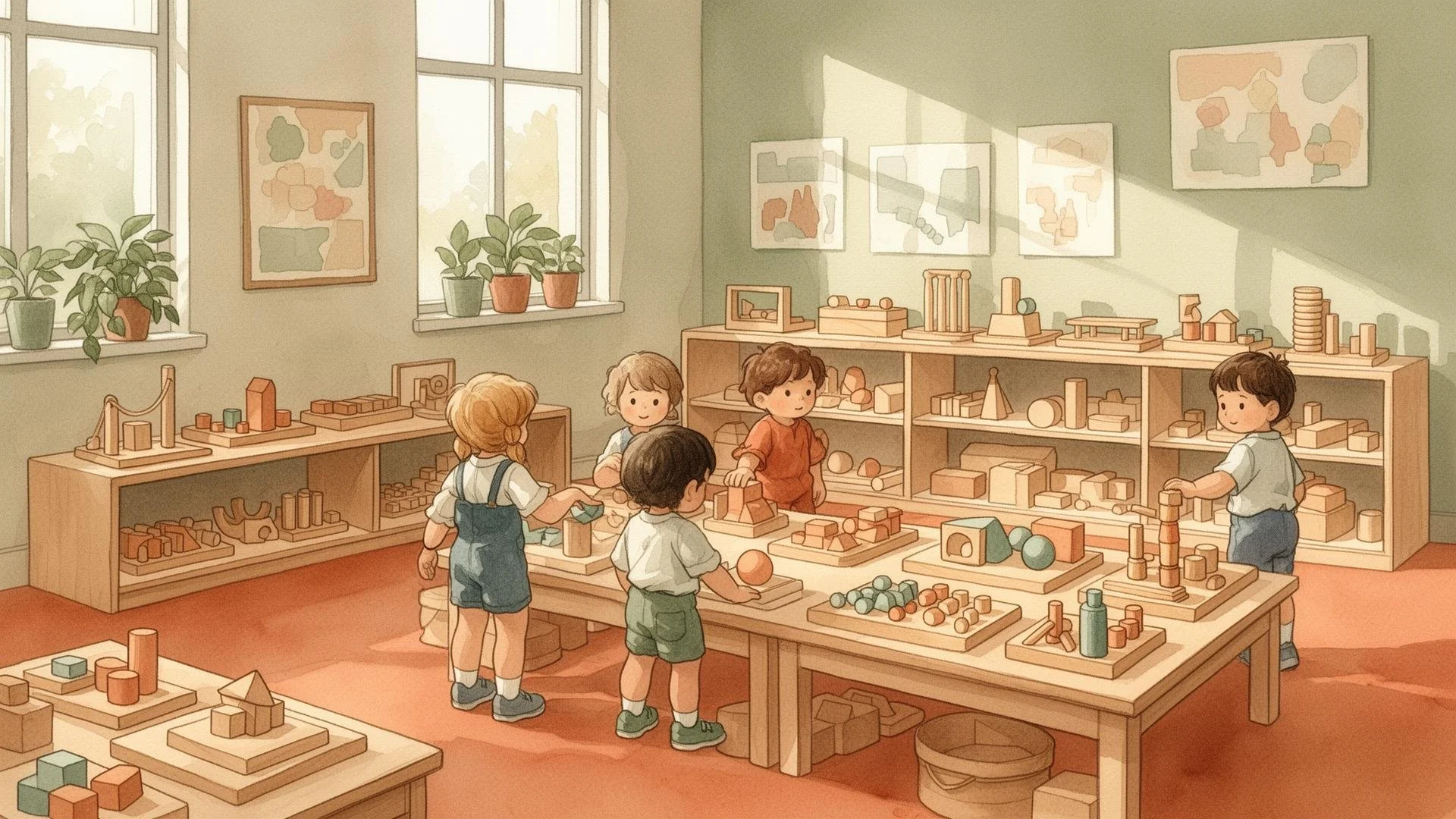
Montessori is a child-centered approach to education that focuses on how children naturally learn best—through exploration, hands-on experiences, and independence.
In a Montessori environment, children learn at their own pace using specially designed materials that build concentration, confidence, and a love for learning. Teachers act as guides, observing each child and gently supporting their growth rather than directing every step.
Mixed-age classrooms encourage collaboration, leadership, and respect, while practical life activities help children develop real-world skills alongside academics. The result is a calm, engaging learning space where children become curious, capable, and self-motivated learners.Authentic Montessori Environment
As a Montessori consultant, I work with schools seeking clarity, consistency, and impact in their Montessori practice. An authentic Montessori environment is not defined by materials alone, but by how intentionally the space, adults, and routines support children’s learning and wellbeing. When implemented well, it strengthens independence, concentration, engagement, and inclusive practice across the setting.
A truly authentic environment responds to children academically, socially, and emotionally, enabling steady progress at an individual pace while maintaining calm and order. This clarity of practice supports educators, improves outcomes for children, and ensures alignment with both Montessori principles and statutory expectations.
Check the five core principles I help schools use as pillars to create authentic, high-quality Montessori environments.
-
An AMI-trained guide uses expert observation to determine when each child is developmentally ready, introducing lessons at the right moment to honor and support every child's unique learning journey.
-
Children learn at their own pace in a prepared environment that encourages independence, confidence, and self-directed exploration.
-
Purposefully designed Montessori materials help children understand complex ideas through hands-on, tactile experiences.
-
We nurture academic growth while also supporting social, emotional, and moral development.
-
Children work independently and alongside peers, developing cooperation, respect, and strong social skills.
Montessori vs Traditional Education
Families and educators often ask how Montessori differs from traditional schooling. While both aim to support learning, Montessori places the child at the center of the experience emphasising independence, hands-on exploration, and respect for each child's individual pace.
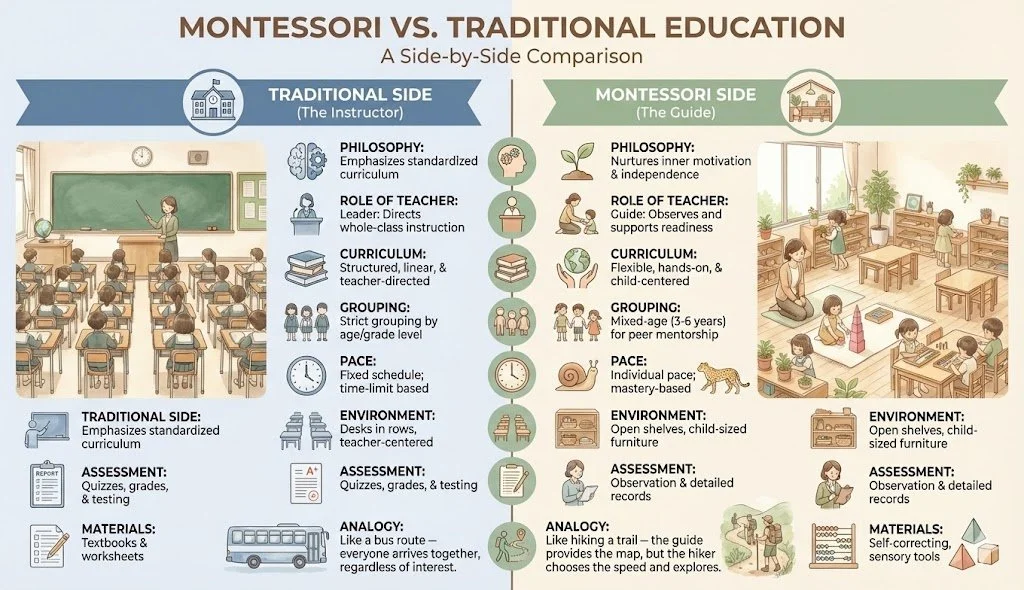
Across the world, schools are embracing Montessori education because it meets the needs of today's children and prepares them for tomorrow. With over a century of success and continued support from modern research, Montessori remains a trusted approach to education one that respects the child and empowers the learner.
Montessori with EYFS
Montessori & EYFS integration is a powerful combination. In the UAE and UK, many nurseries operate within the Early Years Foundation Stage (EYFS) framework. At Montessori with Mona, we specialize in integrating Montessori principles with EYFS requirements giving your school the structure of EYFS with the depth and richness of Montessori pedagogy.
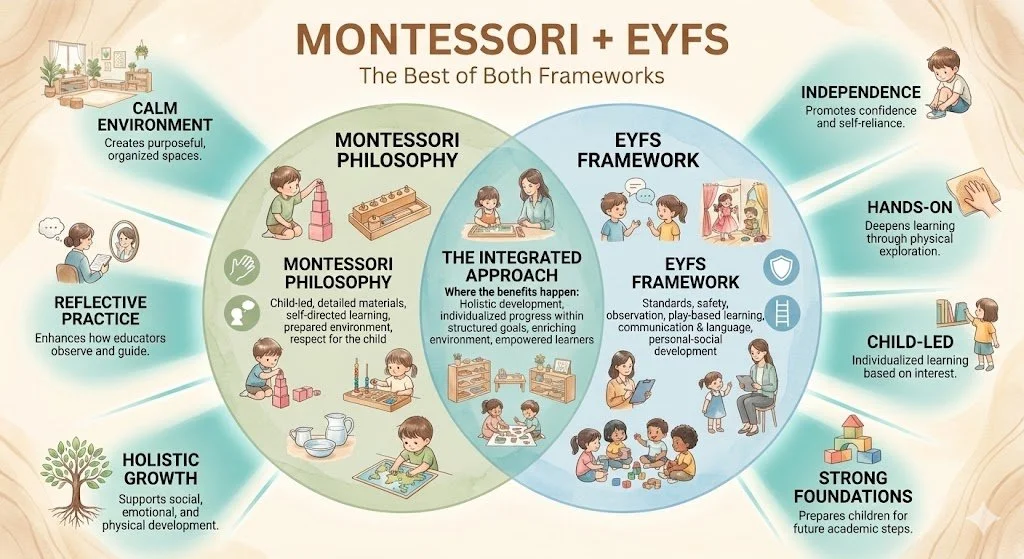
This integrated approach is our key expertise: helping schools deliver exceptional early years education that satisfies regulatory frameworks while honoring child-led, hands-on learning. Montessori + EYFS helps students with inclusion by providing individual sensory-rich, flexible, and emotionally supportive environments that meet diverse needs without separating children from their peers.