
Practical Parenting for Real Life
Respect the Child. Trust the Process. Support the Parents.
You are your child’s first and most vital guide. Our role isn’t to replace that—it’s to equip you with the knowledge, confidence, and practical tools to create a home where your family can truly thrive.
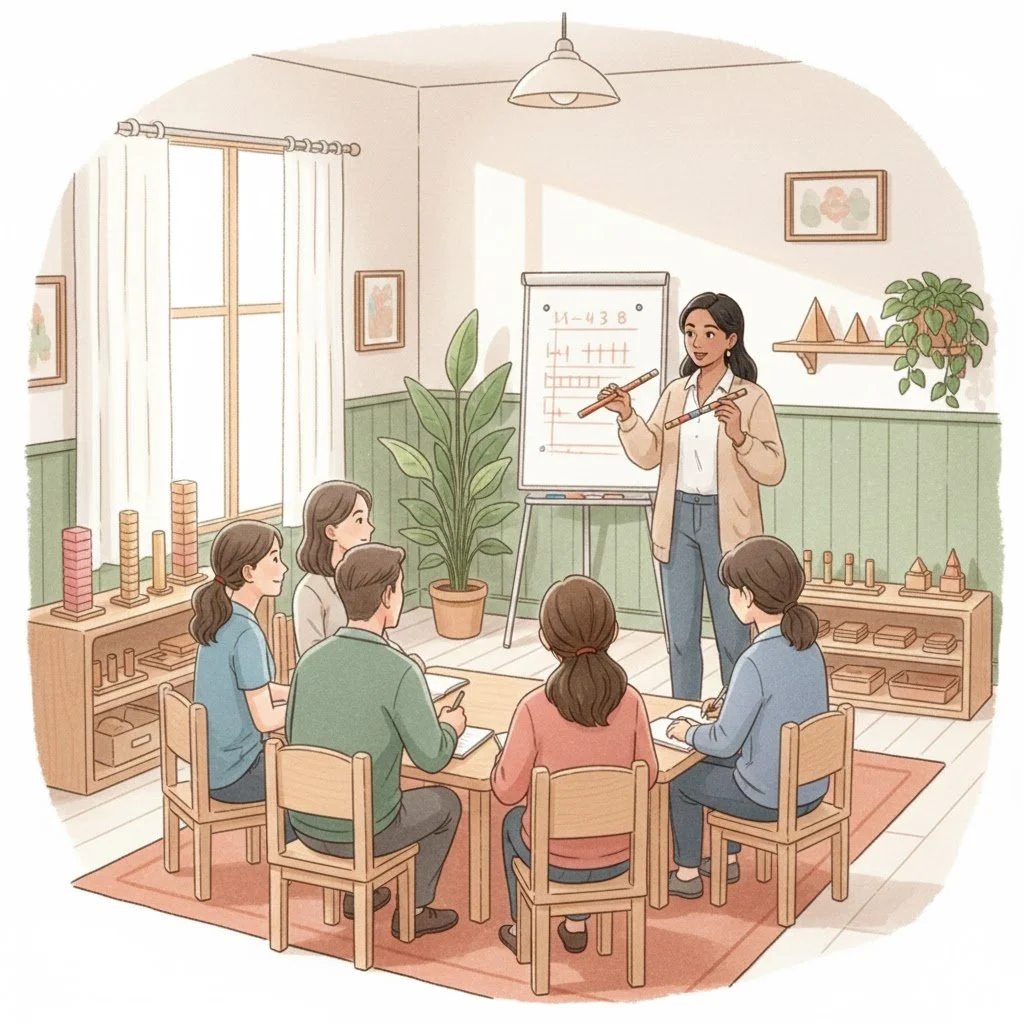
Through our consultations and workshops, we focus on:
Observation Skills: Learning to truly see your child’s readiness, interests, and needs so you can respond with clarity.
Real-World Montessori: Practical ways to bring independence and "Practical Life" into your home from laundry to meal prep.
Science, Not Perfection: Setting realistic expectations grounded in developmental science, not "Pinterest-perfect" standards.
Sustainable Routines: Creating flow that honors both your child’s development and your actual family reality.
Confidence First: Building the skills and knowledge you need to trust your own parenting intuition.
A child is not a project to be completed, but a capable individual building themselves through real-world experience
Parent’s Questions
-
Yes. Montessori children develop strong concentration, independence, problem-solving skills, and deep conceptual understanding. These foundations support smooth transitions into British, IB, American, CBSE, or MOE curricula commonly found in the UAE.
-
Montessori offers freedom within clear limits. Children choose purposeful activities within a structured environment. Grace, courtesy, and respect are explicitly taught. Discipline is developed internally rather than enforced through punishment.
-
For children under 6, Montessori prioritizes real-life, hands-on experiences over screens. Research consistently shows that movement, sensory exploration, and human interaction are more beneficial during early brain development.
-
Absolutely. Montessori principles can be shared with caregivers:
Encourage the child to dress independently
Allow participation in simple household tasks
Maintain consistent routines
Offer limited, clear choices
Parent–Nanny alignment is key in many UAE households.
-
Yes. The early years are ideal for language acquisition. Montessori supports rich vocabulary development and oral language, making it especially effective for bilingual or multilingual families.
-
Provide child-sized tools
Encourage independence in dressing and eating
Limit over-scheduling
Allow safe exploration
Offer practical life opportunities (watering plants, helping in kitchen, organizing shoes)
Consistency between school and home strengthens development
-
This question often reflects concerns about:
Inclusion within a mixed-age environment
Availability of shadow teachers or learning support assistants
Alignment with KHDA/ADEK inclusion policies
Early identification and intervention
Collaboration with speech therapists, occupational therapists, or psychologists